Posts by Leigh Edmonds
The Curator’s Choice 010 – Unsuccessful US Aircraft
Unsuccessful United States Aircraft North American XB-70 – Bell XP-77 – Convair XFY Today’s excursion is into the galley of United States aircraft. There are a lot of really famous aircraft in here but I thought that it would be fun to look instead at some promising ideas that didn’t work out. Surely the biggest…
Read MoreAdditions to the Museum’s Collection – 010, 1 May 2022
The latest addition to The Steve Pulbrook Gallery is the Hasegawa 1/72 Nakajima Ki-27. The latest upgrade, including a PDF, is for the 1/72 Panhard EBR90 made by WSW Modellbau. The latest additions to the Public Galleries are: The Matchbox 1/72 Hawker Fury I The Airfix 1/72 Hawker Hurricane I The Hobby Boss 1/72 Heinkel…
Read MorePanhard EBR-90 in 1/72 by WSW Modellbau
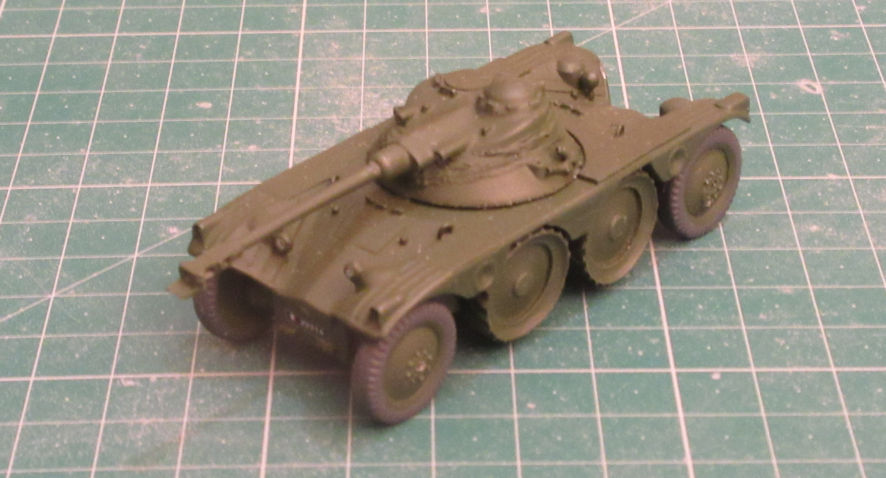
I have this passion, one of several to be sure, for French tanks. It comes from liking French aeroplanes and having a sneaking fondness for tanks in general, and also a liking for the simplicity of making tank models – they’re basically metal boxes on wheels or tracks, in 1/72 anyhow. So I started off…
Read MoreThe Curator’s Choice 009 – British Naval Aircraft
British Naval Aircraft Blackburn Skua – Hawker Siddeley Sea Vixen FAW.2 – Blackburn Buccaneer Today I thought we’d wander around the gallery of British aircraft and once inside I noticed that, to date, there are only four naval aircraft. So let’s look at three of them. The Blackburn Skua was ground breaking aircraft when it…
Read MoreCapital – The Cause of Australia’s First Airline Accident
(This article was published in The Journal of Transport History, Vol 15 No 2, 1994, pp.165-78.) (A PDF copy with endnotes is available here.) On a day in early summer 1921 three Bristol Tourer aeroplanes droned north through Western Australian skies. They crossed the Murchison River about an hour’s flight north of Geraldton in…
Read MoreThe Creation of West Australian Airways – What the Accountant Saw
(This item was published in Man and Aerial Machine 29, May-June 1992. It was taken from a draft of my PhD thesis.) (A PDF copy with endnotes i available here.) (A PDF copy with endnotes is available here.) In 1921 Norman Brearley and a number of Western Australian business men and pastoralists established Western…
Read MoreAdditions to the Museum’s Collection – 009, 24 April 2022
Here are the additions to the Public Galleries this week: Ansett-ANA Boeing 727-100 in 1/144 made from the Airfix kit Dassault Rafale C in 1/72 made from the Italeri kit. Dassault Super Mystere in 1/72 made from the Airfix kit. deHavilland Hornet F.1 in 1/72 made from the Special Hobby kit. deHavilland Sea Hornet NF.21…
Read MoredeHavilland Hornet F.1 in 1/72 by Special Hobby
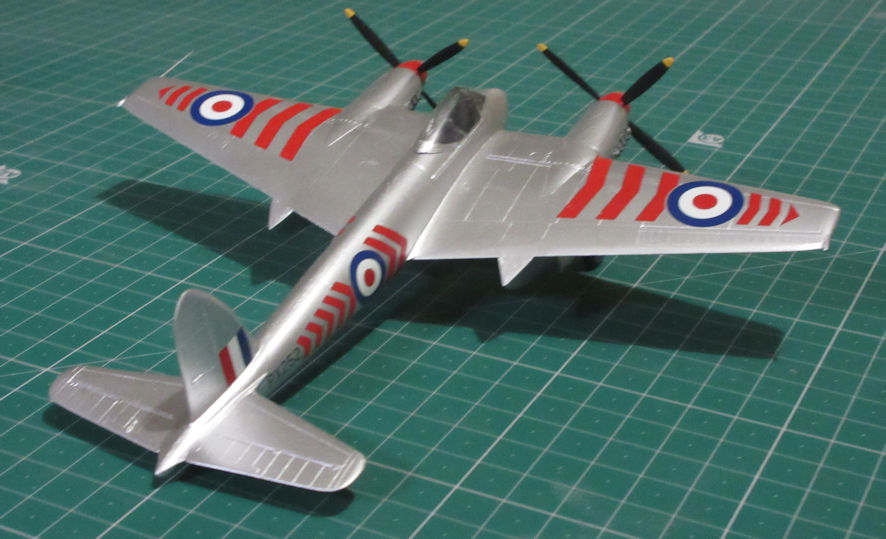
In between the Mosquito and the Vampire the deHavilland company had spare design capacity that was turned to several projects, finally emerging as the DH-103 Hornet. It was a highly evolved piston engine fighter designed around two especially developed Merlin engines of low frontal area and calling upon the experience gained from designing and perfecting…
Read MoreAirmindedness: Selling a New Kind of Technology to the Australian Public
(I presented this paper at the Australian Historical Association’s conference at the University of Queensland in 1990 and it was later published in Continuum, Vol 7 No 3, 1993, pp.183-206.) (A PDF copy with endnotes is available here.) ‘Airmindedness’ is not a word found in every day speech. It may never have been common…
Read MoreNorth American X-15A-2 in 1/72 by Monogram
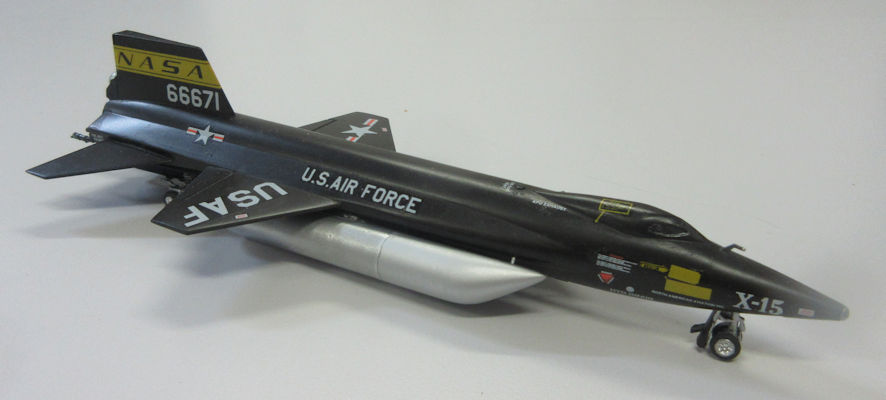
The X-15 was one of the series of purely experimental aircraft developed in the United States from the mid 1940s, starting with the Bell X-1 that was the first aircraft to break the sound barrier. By the early 1950s later X-craft were beginning to explore the speed range around mach 2 and the need began…
Read MoreMiG-31 in 1/72 by Condor
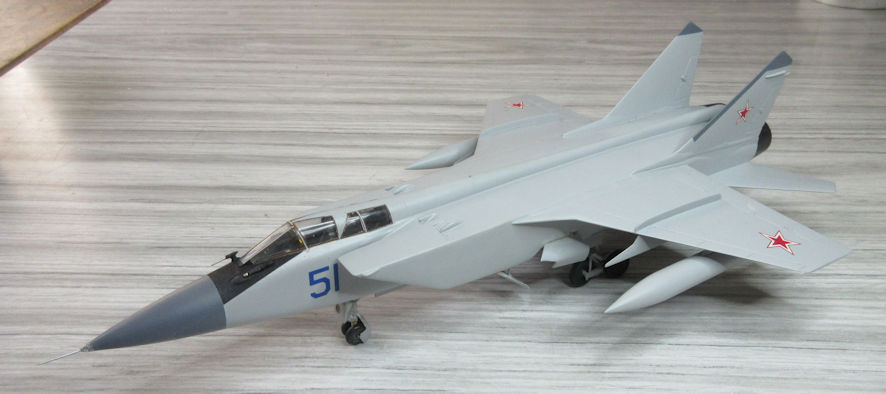
By the 1970s the USSR was facing a formidable array of new fighters and bombers planned or in development in the west – the SR-71, B-1, F-15 and cruise missiles which were all serious threats to Russian airspace. The Russians were also developing an equivalent new generation, including the Backfire and Flanker, but also needed…
Read MoreBereznyak-Isaev BI in 1/72 by Eastern Express

If anything, the Russians were more advanced in rocket design and development than the Germans by the beginning of World War Two. Experiments into using rockets for many purposes including air-to-air and air-to-surface missiles were conducted by an official development bureau, the RN11, that was formally established in 1934 to coordinate research previously conducted by…
Read More