History
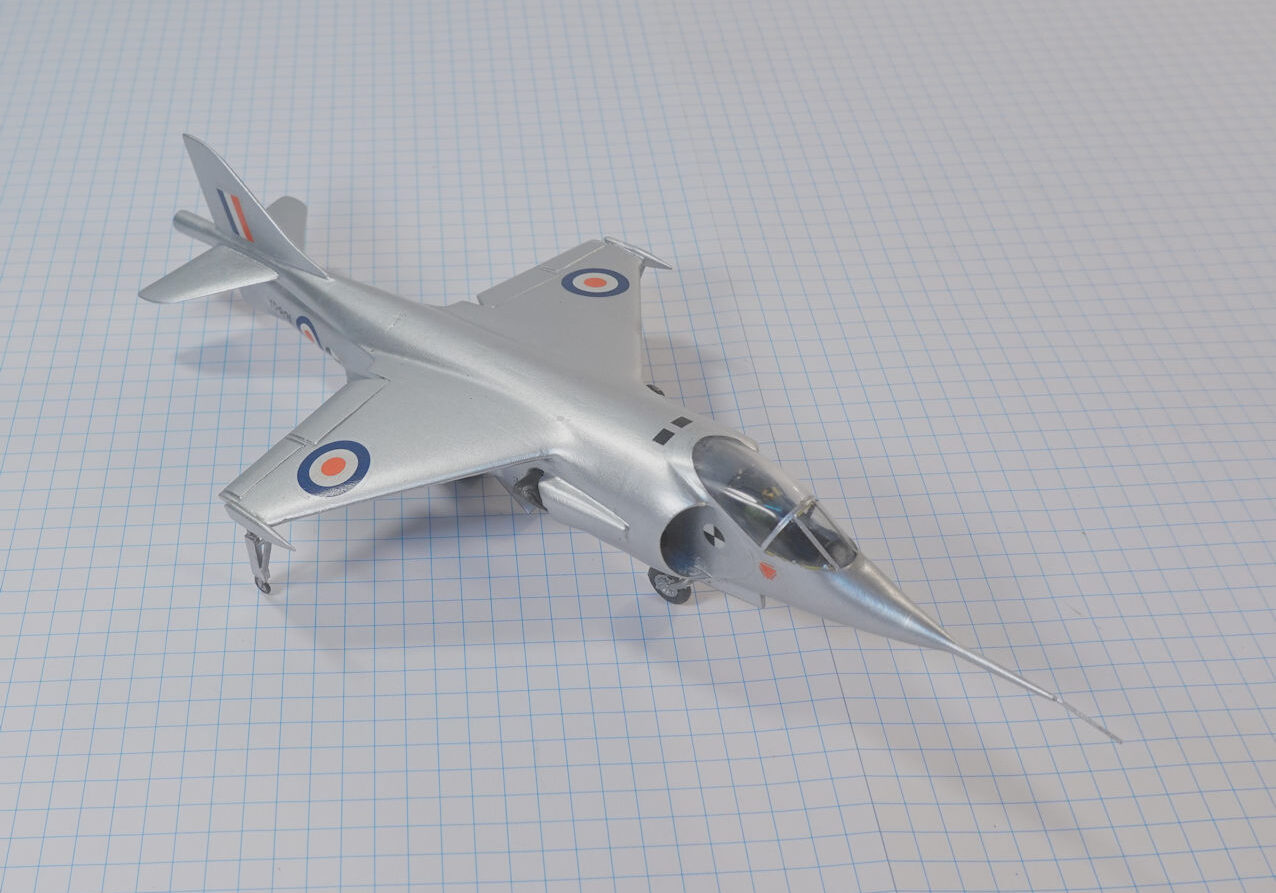
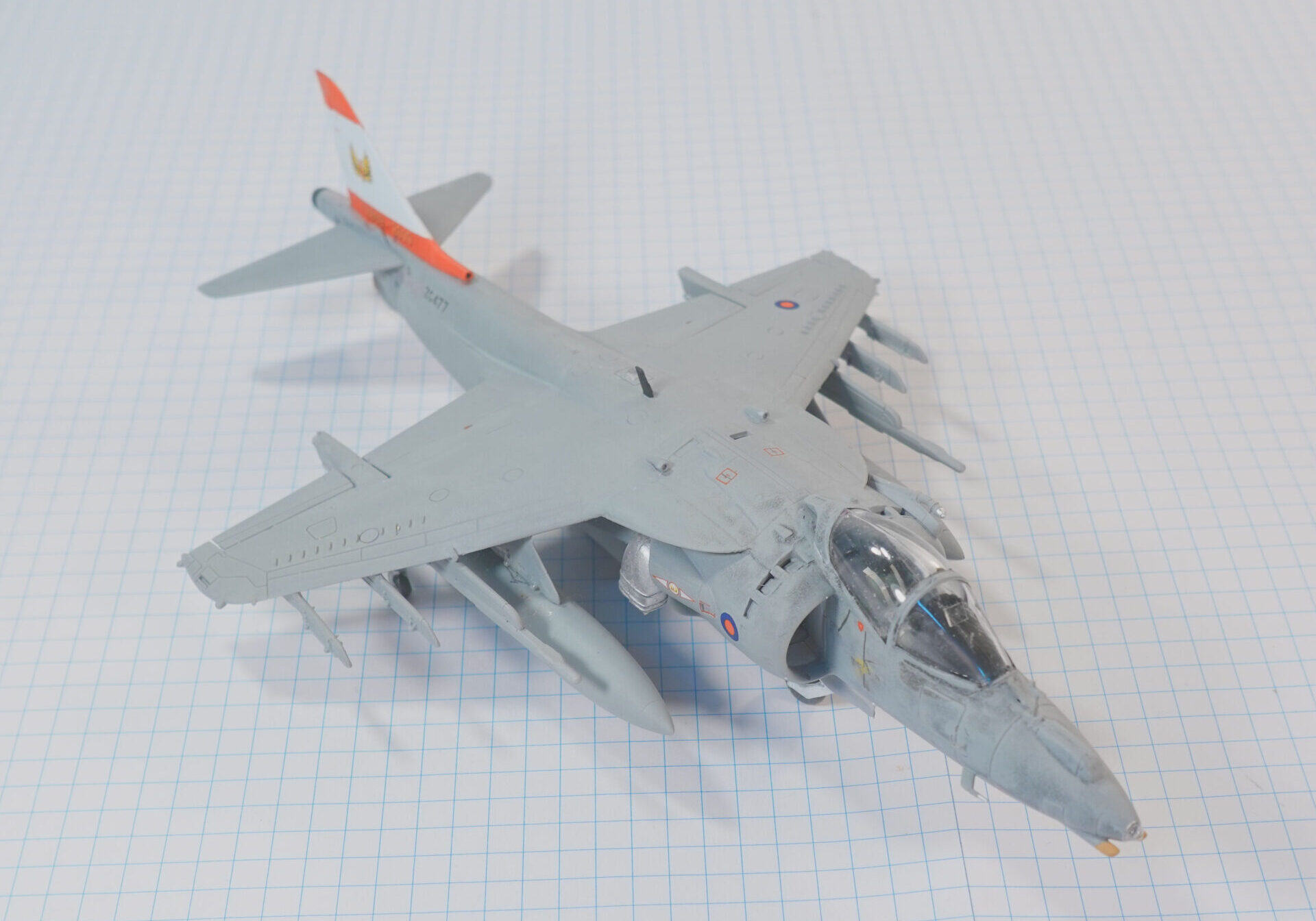
The Hawker P.1127 was a vertical take-off and landing experimental aircraft develeoped in Britain in the 1950s and tested in the early 1960s. It was then developed into the range of Harrier and AV-8 strike fighters.
During the 1950s military planners became concerned about the vulnerability of runways, the destruction of which could keep air forces grounded. One solution to this problem was to make aircraft that didn’t need runways.
One result was the Bristol Siddeley Pegasus engine which had four nozzles that could swivel to direct its thrust to lift an aircraft off the ground vertically and then rotate to give power to vertical flight.
Hawker built the P.1127 test aircraft around this engine. It made its first flight on 19 November 1960.
It was subsequently developed to become the Harrier strike fighter.
This model represents the P.1127 prototype in 1961. It is now on display in The Science Museum, Kensington.
Airfix 1/72 kit completed by Leigh Edmonds in September 2025.
Data