History
The Vickers Vimy was a heavy bomber produced in Britain in the late 1910s. It became famous in 1919 as the first aircraft to fly across the Atlantic Ocean and also the first to fly between Britain and Australia.
The Vickers Vimy heavy bomber was designed towards the end of World War 1 but entered service to late to play an active role in it.
Subsequently it remained in front line service with the RAF until the mid 1920s and remained flying in secondary roles until 1938.
A troop transport version with an enlarged fuselage, the Vickers Vernon, and a similar civil airliner version were also produced.
In 1919 Vimy’s made the first trans-Atlantic flight and the first flight from Britain to Australia. That flight covered almost 18,000 kilometers in just under a month and a flying time of 135 hours and 55 minutes.
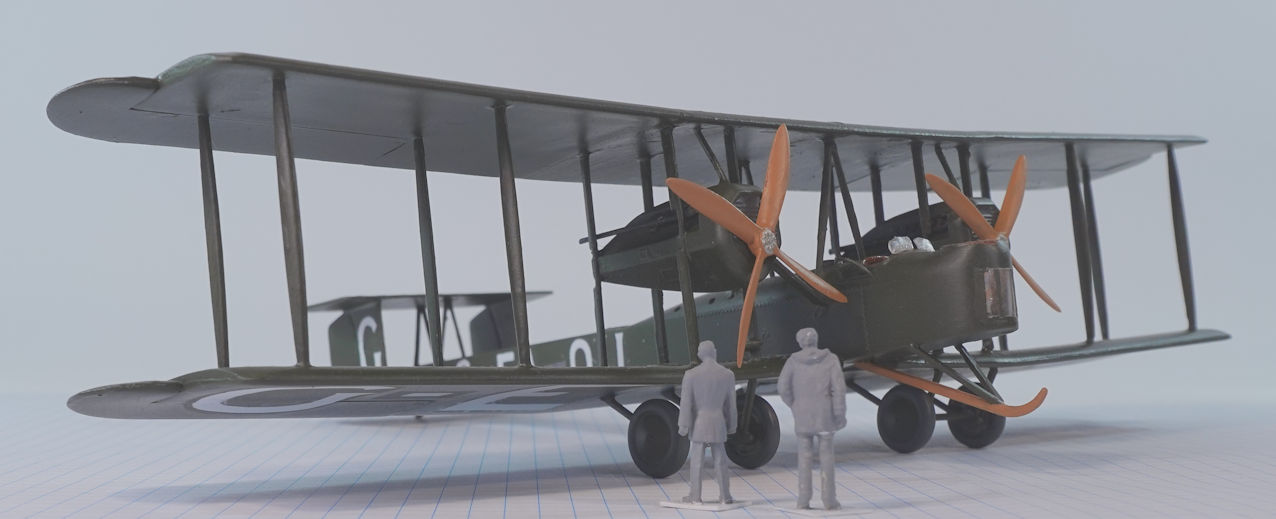
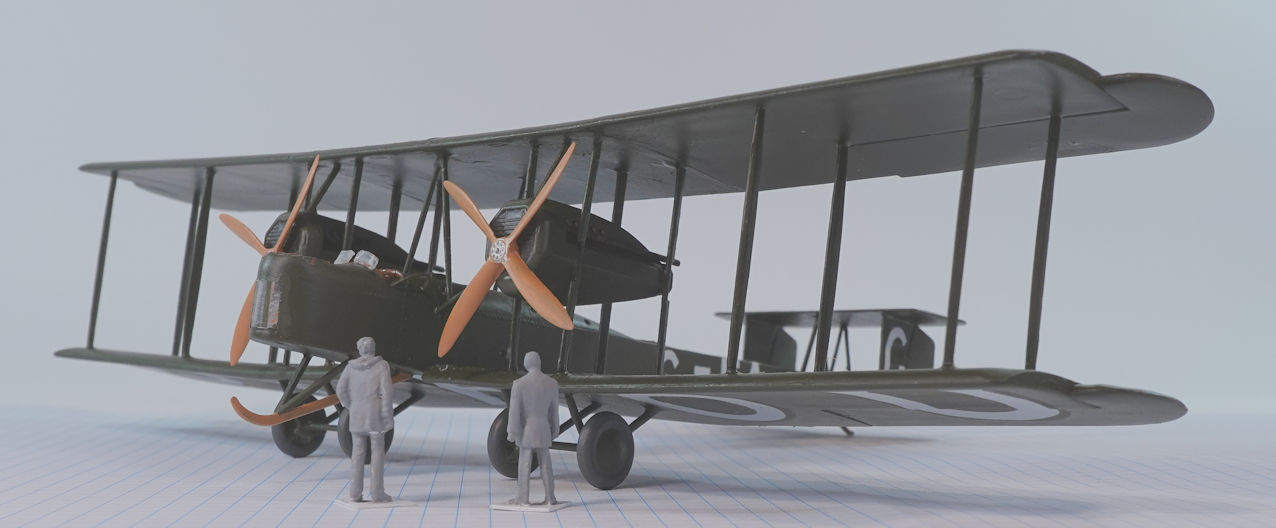
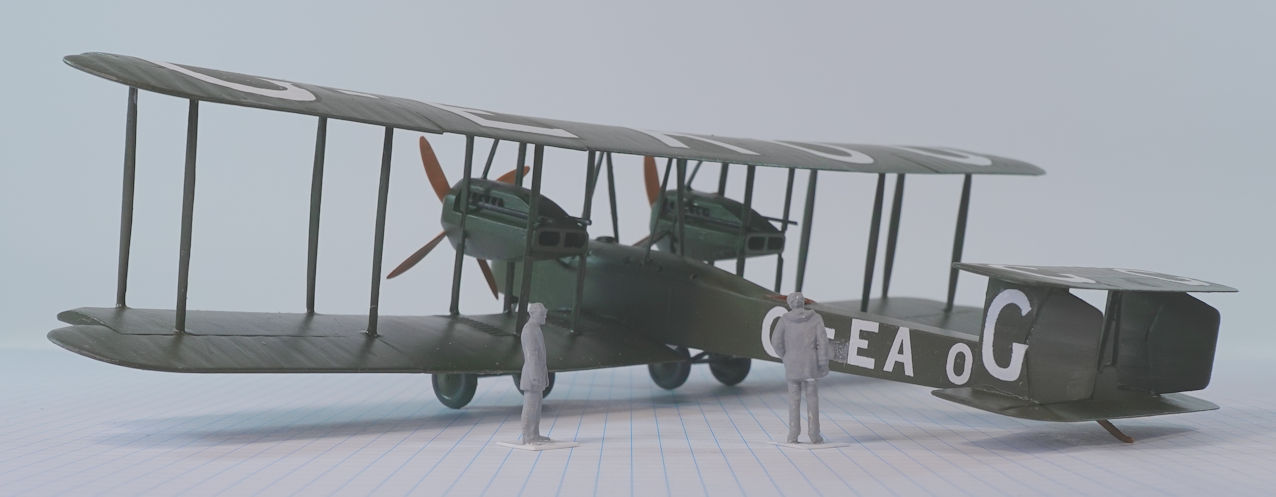
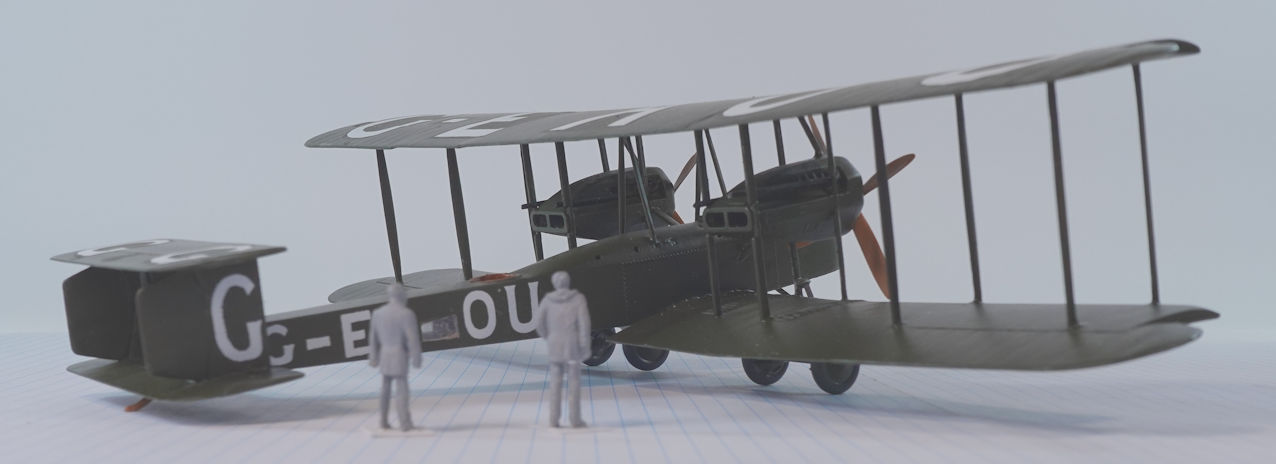
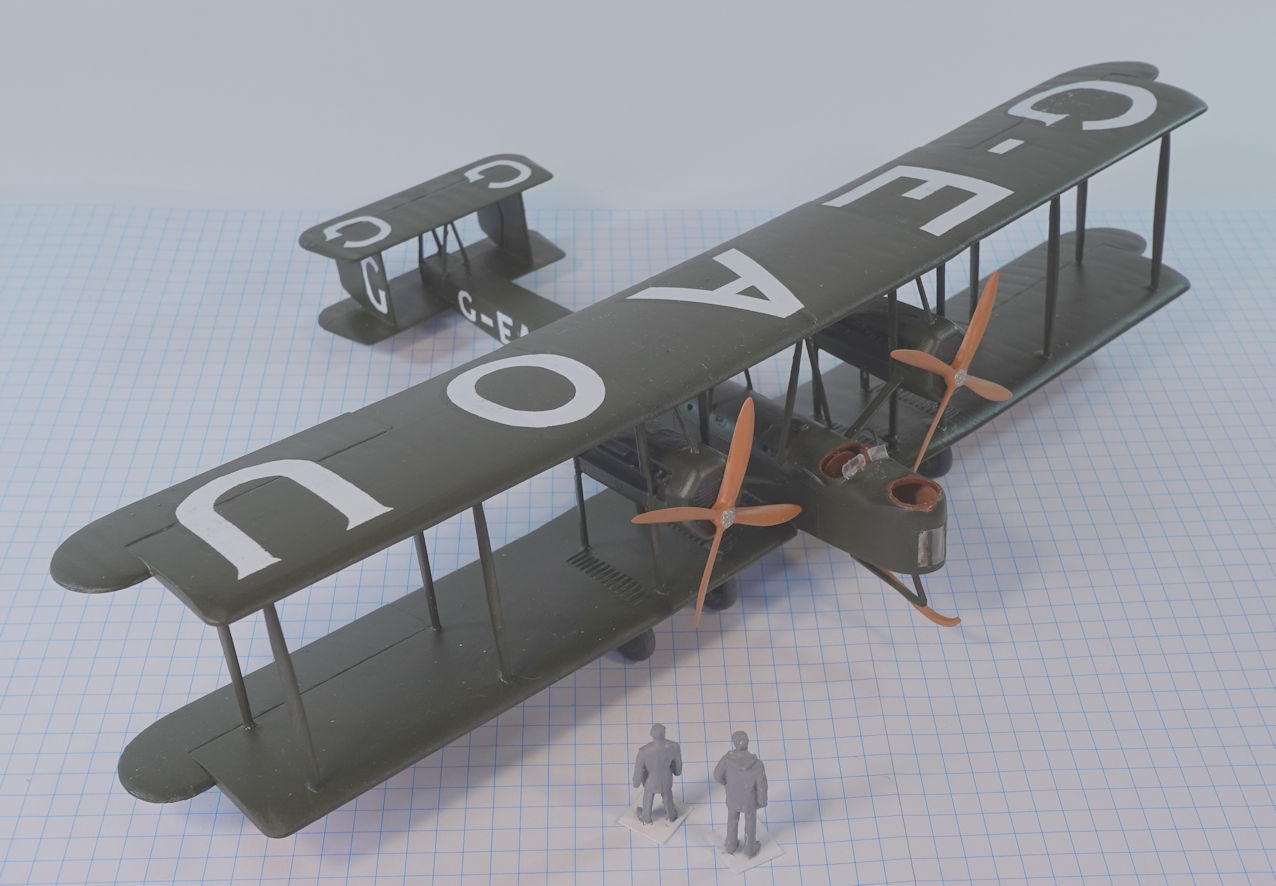
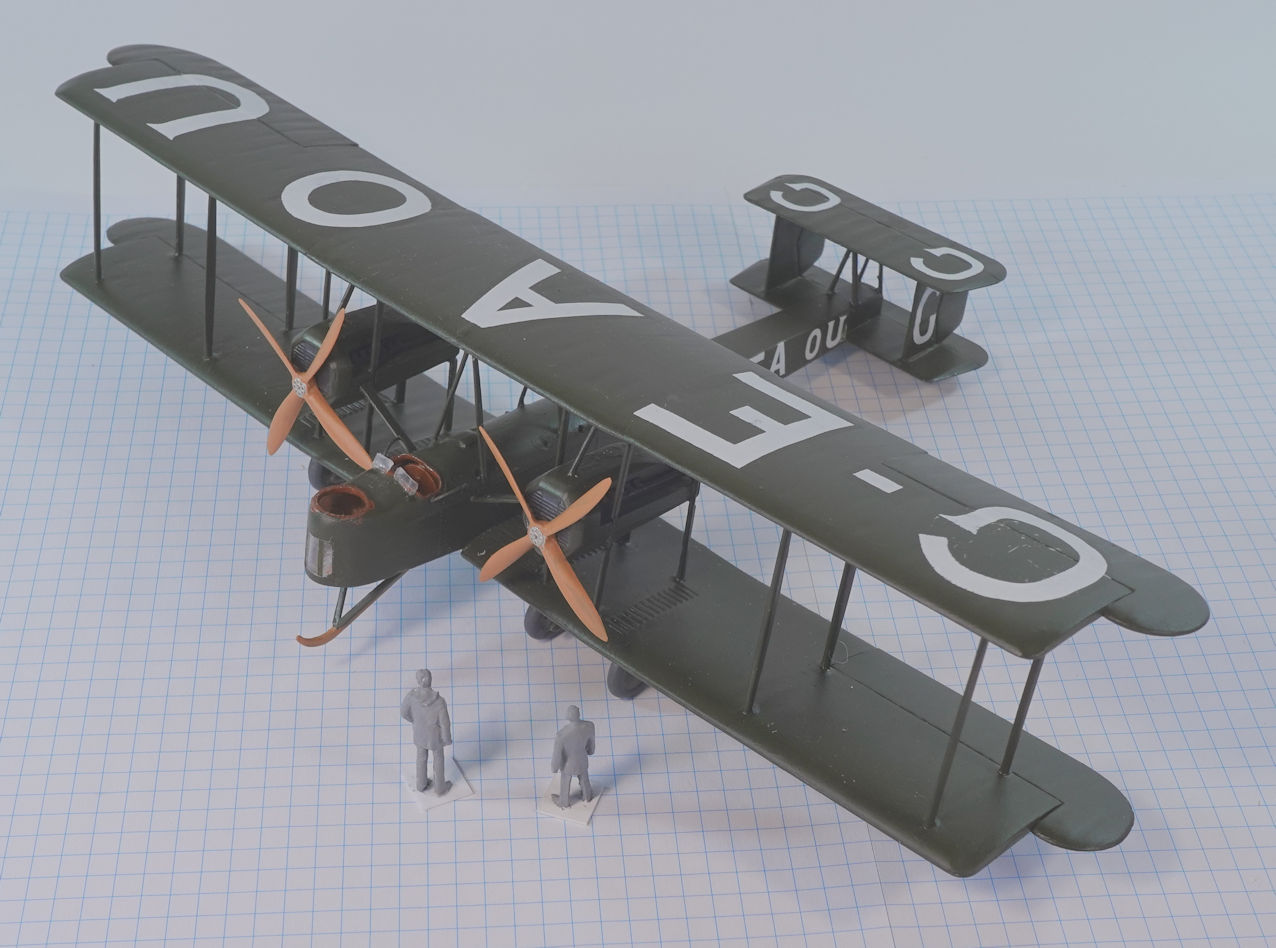
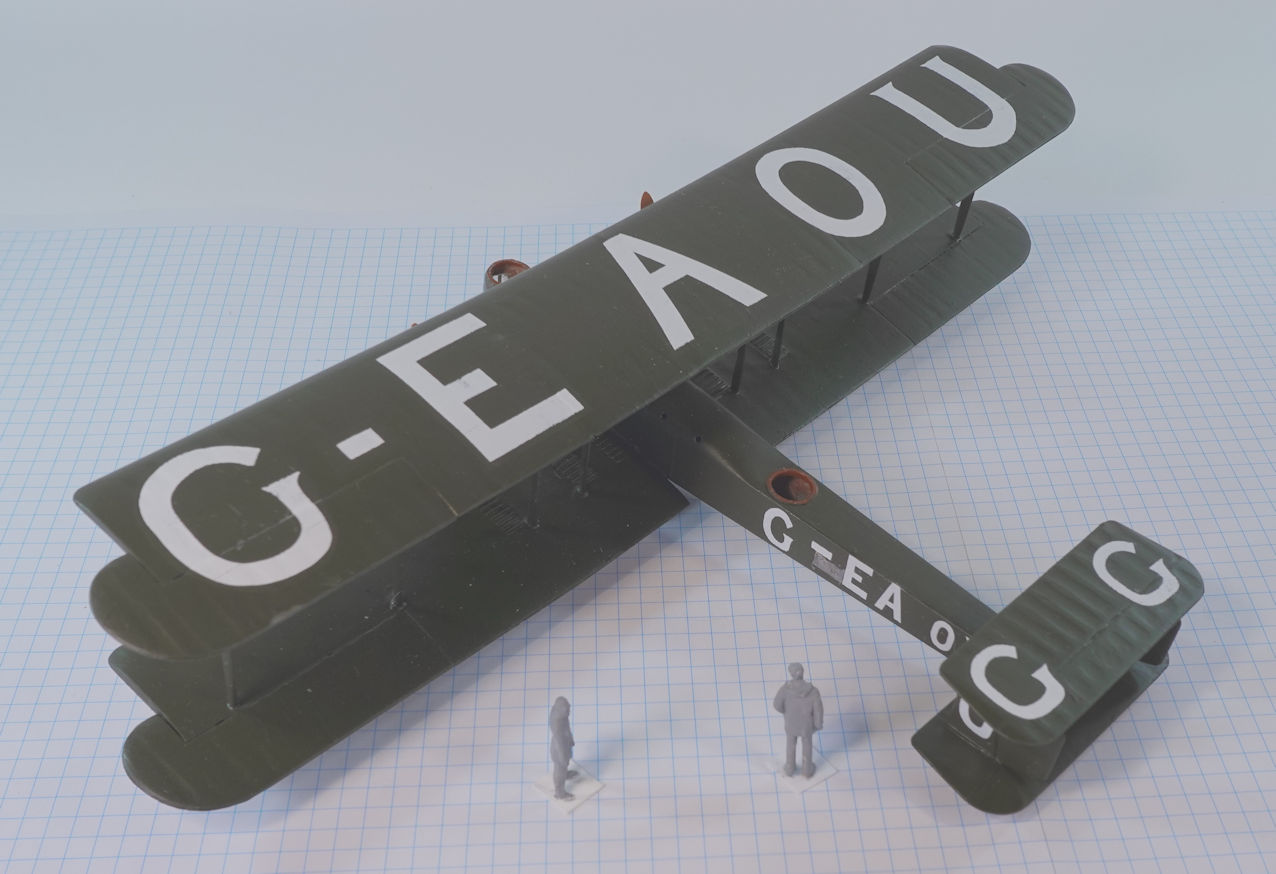
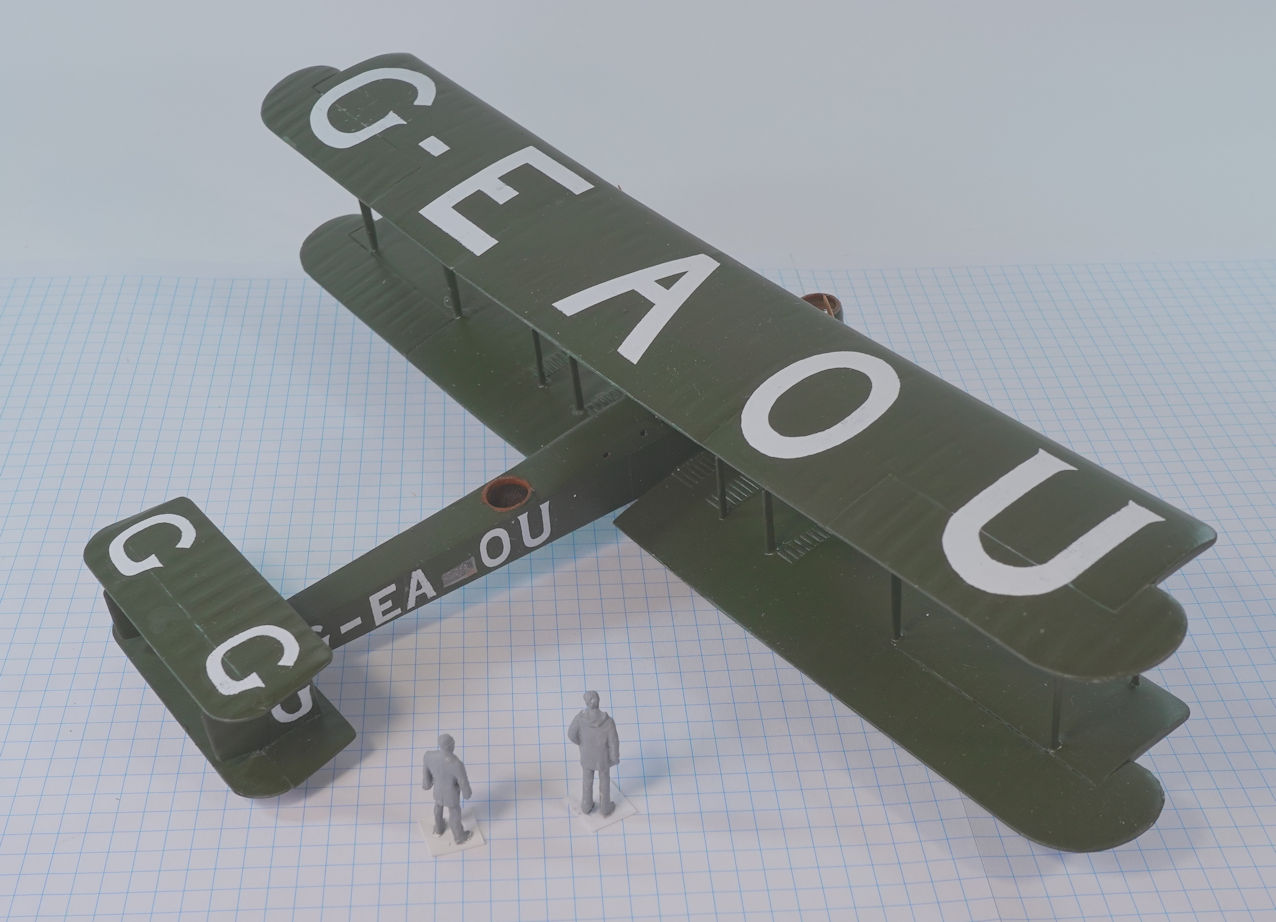
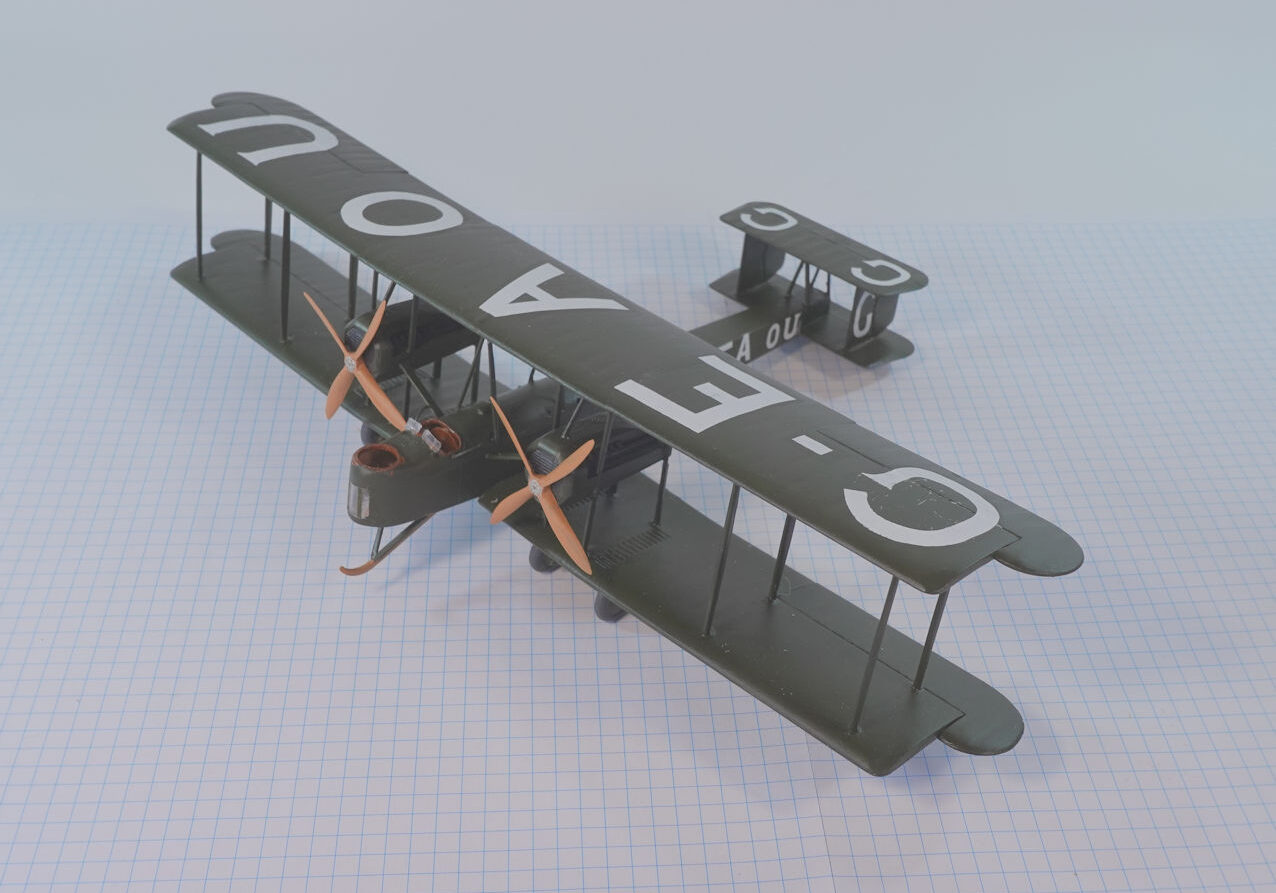
This model represents G-EAOU, the first aircraft to fly from Britain to Australia.
Frog 1/72 kit with Red Roo decals.
Data